



 Book an appointment
 6 samples for $9
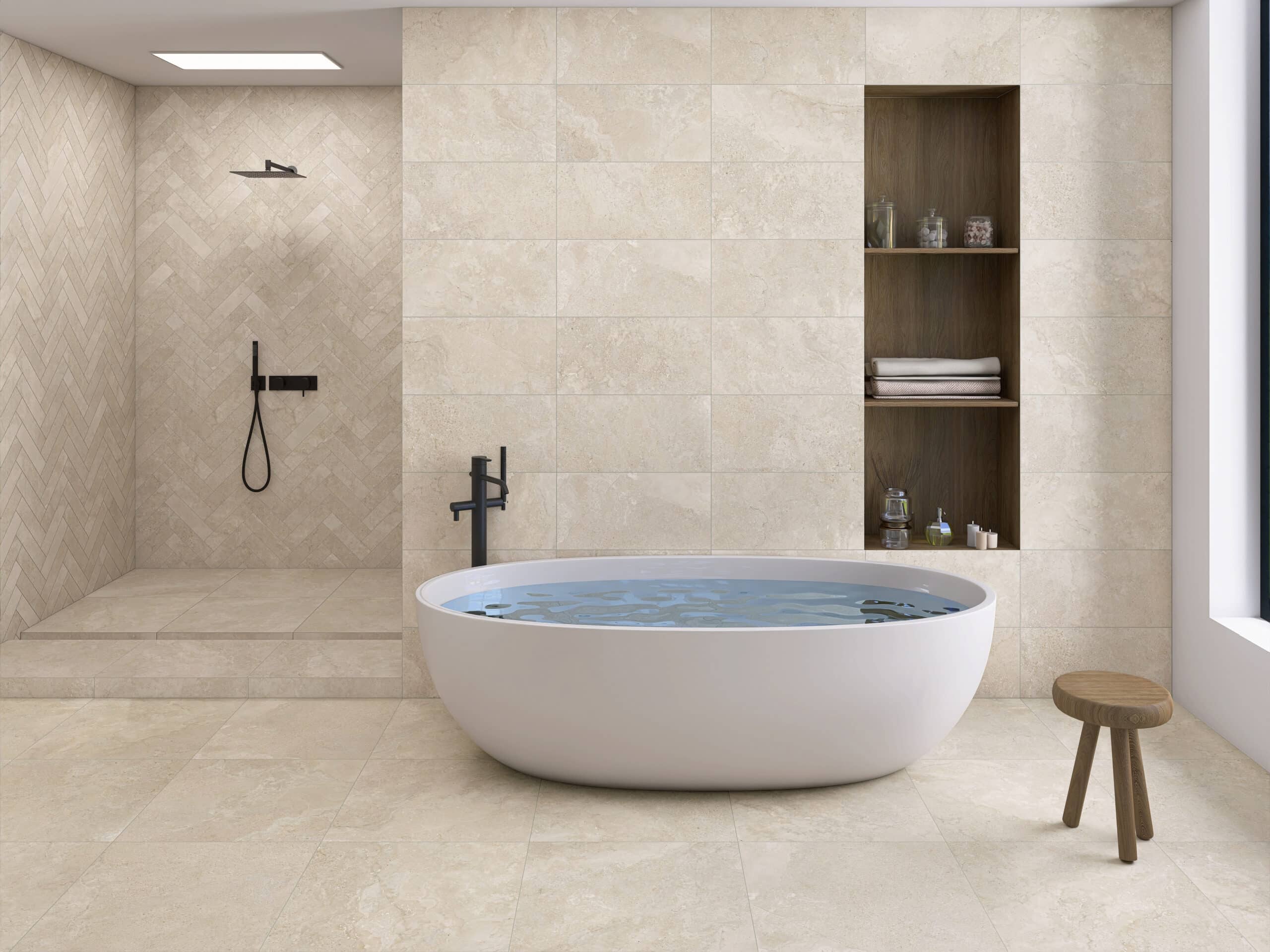
Picture this: you’ve just finished your dream bathroom renovation, and the high-gloss slabs look absolutely stunning. Step out of the shower, and your marble-look porcelain floor feels more slick than sleek.
Here’s the truth that most homeowners discover too late: the most beautiful tiles can be a safety hazard if you don’t understand the slip resistance of your tiles. While it’s the less glamorous side of interior design that nobody talks about during home tours, it can be one of the biggest decisions you make during your fit-out, lest you leave it covered up with a rug for traction.
What is a tile slip rating?
As the name suggests, it measures the slipperiness of a surface. Think of it as a safety score that tells you how much grip a tile face provides underfoot, particularly when wet — the higher the rating, the more slip-resistant the tile.
Manufacturers don’t just make up these ratings — they’re determined by standardised testing methods that simulate real-world conditions, so you can feel more confident to buy tiles online or if you need to source designs from different stores.
To determine a floor tile’s slip resistance rating, it’s tested on flat and inclined surfaces, and sometimes with water, oil, and other contaminants, to determine at what point a person would slip. The steeper the angle before slipping occurs, the better the slip rating for tiles.
Why slip ratings matter
Anti-slip tile ratings exist because various areas of your home face different levels of moisture, foot traffic, and potential contaminants. A tile that performs beautifully in a dry living room can become much more dangerous when installed around a pool, bathroom or in a commercial kitchen. In both residential and commercial settings, poor traction can create liability issues and fail to meet building code requirements.
These ratings take the guesswork out of your tile selection, ensuring you choose tile faces that offer the appropriate level of traction for each space. The good news is that modern tile manufacturing has hugely evolved, enabling you to find extensive options that balance aesthetic appeal and functionality.
Understanding Australian tile slip rating standards
The National Construction Code (NCC), together with the Building Codes of Australia (BCA), uses the AS 4586 standard to regulate tiled flooring. While Australian standards for tile slip ratings are more strictly prescribed in commercial spaces, they are still important to follow, particularly for ramps, stair nosings, and landings.
In Australia, both P and R slip rating systems are referenced; however, P ratings are the primary slip resistance test used to assess compliance with Australian standards, particularly in commercial environments. The P rating system (also known as the wet pendulum test) is the required measure for meeting commercial slip resistance requirements.
The R rating system, by comparison, is a European slip testing method based on ramp testing. While R ratings can provide useful additional guidance, they are not used to determine compliance with Australian commercial standards, where a P rating is required.
Both systems use different testing methods but serve a similar purpose: helping you select the most appropriate tile for the intended environment and application.
What are P-slip ratings?
P-slip ratings are determined using the Pendulum test, which measures the frictional resistance between a wet tile surface and a rubber slider that simulates a standard shoe sole. During this test, a pendulum arm swings across the tile, and the amount of resistance is recorded. The higher the frictional resistance, the lower the slip risk.
P-slip ratings range from P0 to P5:
| Pendulum Classification | Risk Level | Appropriate for |
| P0-P2 slip ratings | Very high | Dry environments, such as bedrooms, living rooms |
| P3 slip ratings | Moderate | Most indoor applications, including kitchens and bathrooms |
| P4 slip ratings | Low | Outdoor tile slip rating suitable for verandahs, patios, and other alfresco entertaining areas |
| P5 slip ratings | Very low | Pool surrounds and commercial outdoor spaces |
What are R-slip ratings
R-slip ratings are determined through the Oil-Wet Ramp test, where testers walk on an inclined platform coated with lubricating oil. The ramp angle gradually increases until the tester can no longer maintain a safe footing — the steeper the angle before slipping occurs, the higher the slip resistance.
R slip ratings range from R9 to R13:
| Slip Resistance Value | Resistance Level | Appropriate for |
| R9 slip rating | Basic | General areas such as bedrooms and lounge rooms with minimal moisture |
| R10 slip rating | Moderate | Dry areas, like kitchens with occasional moisture |
| R11 slip rating | High | Frequently wet areas, including bathrooms and pool surrounds |
| R12 slip rating | Very high | Commercial environments |
| R13 slip rating | Maximum | Extreme conditions |

Factors that affect slip resistance
While your tile’s slip resistance rating is a great indicator, several factors influence real-world performance:
- Surface texture: Tiles with structured, matte, or textured finishes generally offer better traction than smooth, polished surfaces. However, modern manufacturing techniques can create surfaces that feel relatively smooth while still providing more grip.
- Contamination: Oil, grease, soap residue, and even dust can reduce the resistance of your surface. Regular cleaning ensures they perform as intended.
- Footwear: Different shoes provide varying levels of grip. Barefoot contact, common in bathrooms and pool areas, requires higher slip ratings than spaces where people are more likely to wear shoes.
- Drainage: Proper drainage helps remove water quickly, reducing the duration of slippery conditions even on lower-rated tiles.
Visit Elegance Tiles to discover collections that perform in style and functionality
Planning your home build and renovation requires extensive planning, but finding tiles that aren’t a fall risk shouldn’t take away your time. At Elegance Tiles, we source our collection from leading suppliers in Italy, Spain, Brazil and the UAE, among others, so you can make a statement without compromising.
From the kitchen and bathroom to tile faces suited for outdoor entertaining, each design shares its P and R-slip ratings so that you can shop with ease. If you’re looking to future-proof your home and prepare for any situation, consider our stylish Sliptech range. They’re uniquely suited to integrate slip resistance into their design, giving you more peace of mind that your flooring accommodates young, old, and clumsy family members and visitors.
Ready to create a home boasting a design that is both stylish and safe? Explore the complete range at Elegance Tiles online or visit our showroom. With our easy sampling program, you can take tile samples home or have them delivered to your door. We make it simple to plan your design and observe how your preferred tile colour and finish look under natural and indoor light.
If you need some advice, don’t hesitate to contact us — our team is here to help.


